
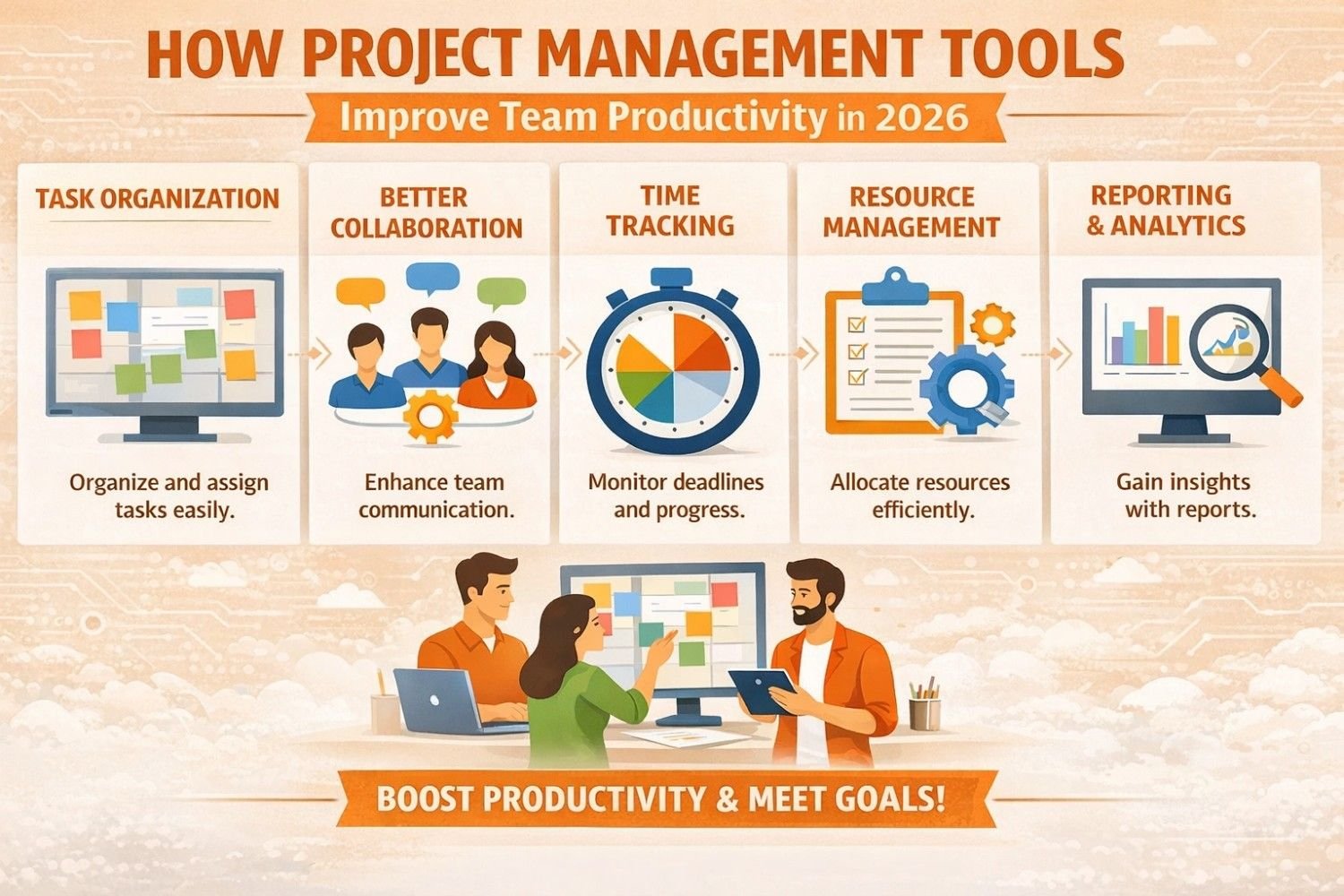
In today’s highly competitive digital economy, team productivity is no longer optional—it is mission-critical. Organizations across Tier-1 markets such as the United States, United Kingdom, Canada, Australia, and Europe rely heavily on project management tools to streamline workflows, improve collaboration, and deliver projects faster.
This SEO-optimized guide explains how project management software for productivity transforms team performance and why it has become one of the highest-ROI SaaS investments for modern businesses.
Why Productivity Is a Critical Business Metric
Improving productivity directly impacts core business outcomes:
- Revenue growth
- Operational efficiency
- Employee satisfaction
- Customer experience
In high-cost Tier-1 economies, even small efficiency gains can generate significant financial returns—driving strong demand for project management productivity software.
Common Productivity Challenges Modern Teams Face
Before implementing tools, many organizations struggle with:
- Unclear goals and shifting priorities
- Poor cross-team communication
- Missed deadlines and delays
- Overloaded or underutilized team members
- Lack of real-time performance visibility
Modern cloud project management tools are specifically designed to eliminate these bottlenecks.
How Project Management Tools Increase Team Productivity
1. Clear Task Ownership and Accountability
One of the biggest productivity killers is unclear responsibility. Project management platforms assign ownership to every task.
- No confusion about who does what
- Stronger accountability
- Faster task completion
This clarity alone can significantly boost team efficiency.
2. Centralized Work Management
Project management software creates a single source of truth by consolidating tasks, files, and communications.
- Instant access to project data
- Reduced time spent searching for information
- Improved cross-department alignment
Centralization eliminates workflow fragmentation.
3. Enhanced Collaboration and Communication
Modern tools dramatically improve teamwork through built-in collaboration features:
- Task-level comments and mentions
- Real-time notifications
- File sharing with version control
- Contextual discussions
This reduces unnecessary meetings and email overload.
4. Visual Workflow Management
| Visual Tool | Purpose | Productivity Impact |
|---|---|---|
| Kanban Boards | Track task flow | Faster execution |
| Gantt Charts | Plan timelines | Reduced delays |
| Dashboards | Monitor progress | Better decisions |
Visual workflows help teams instantly understand project status and act quickly.
5. Better Time Management and Focus
Productivity-focused project tools help teams prioritize high-impact work through:
- Smart task prioritization
- Automated due-date reminders
- Built-in time tracking
- Focus-oriented workflows
This minimizes distractions and improves daily output.
6. Resource and Workload Optimization
Workload imbalance is a major productivity drain. Advanced tools enable:
- Workload balancing
- Capacity planning
- Resource forecasting
- Burnout prevention
This is especially valuable for agencies, SaaS teams, and enterprise organizations.
7. Automation of Repetitive Tasks
Automation is one of the biggest productivity accelerators in modern project management platforms.
Common automations include:
- Status updates
- Recurring task creation
- Approval workflows
- Notifications and reminders
Automation saves hours of manual work and reduces human error.
8. Real-Time Reporting and Performance Insights
Data-driven teams consistently outperform manual teams. Built-in analytics provide visibility into:
- Team productivity metrics
- Project health indicators
- Bottlenecks and risks
- Deadline performance
Managers can intervene early to maintain momentum.
9. Support for Remote and Hybrid Teams
With remote work now standard in Tier-1 markets, cloud project management tools enable:
- Location-independent collaboration
- Time-zone friendly workflows
- Equal visibility across teams
- Mobile project access
This keeps distributed teams aligned and productive.
10. Integration with Business Ecosystems
Top platforms integrate with essential business systems:
- CRM software
- Accounting and finance tools
- Email and chat platforms
- Cloud storage services
- Marketing automation tools
Integrations eliminate duplicate work and streamline operations.
Enterprise Productivity Gains
Large organizations using enterprise project management software benefit from:
- Portfolio-level visibility
- Standardized workflows
- Scalable productivity systems
- Cross-department coordination
This enables consistent performance across global teams.
ROI of Project Management Productivity Software
Companies adopting modern tools commonly report:
- Faster project delivery
- Lower operational costs
- Higher employee engagement
- Improved client satisfaction
- Better resource utilization
These measurable gains make project management software one of the highest-ROI SaaS investments available.
Future Trends in Project Management Productivity
The next wave of innovation will include:
- AI-driven task prioritization
- Predictive workload planning
- Smart productivity analytics
- Autonomous workflow automation
These advancements will further enhance efficiency and decision intelligence.
Final Thoughts
Project management tools dramatically improve team productivity by creating clarity, reducing operational friction, and enabling smarter collaboration. For businesses operating in competitive Tier-1 markets, these platforms are no longer optional—they are essential infrastructure.
Organizations that invest in the right project management productivity software position themselves for sustained efficiency, stronger teamwork, and long-term business success.